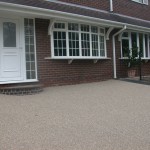
Tarmac Driveway Path and patio

February 2nd, 2013

Tarmac  Driveway Path or Patio  

As specialist installers of Resin Bonded resurfacing and  Resin Bound surfacing  our work can involve the installation and repair of tarmac surfaces including driveways paths and patios.

We can serve within a 60 mile radius  of our base in the East Midlands and extend  to areas such as Lincoln, Leicester, Birmingham, Derby, Sheffield, Mansfield, Nottingham and Chesterfield  for example.

We would first and foremost say  Resin Bonded resurfacing, Resin Bound surfacing or Tarmac are not a good idea  as  DIY projects!   You may be forgiven for trying a path, but a driveway –  if it goes wrong –  it goes really  wrong and  it is a large area to rectify (and expensive)  if it has to be laid twice!

Resin Bonded resurfacing and Resin Bound surfacing  works involve specialist knowledge as there are quite a lot of constraints and contributory factors when working with and using  Resin (temperature and humidity for example)

Tarmac should involve machinery and if it doesn’t the question is why?


Tarmac if laid correctly is quite weather hardy  and can be  coloured – which involves a binder.  There are varying  types of tarmac  however  and you should be aware that  petrol, diesel, engine oil, solvents and paint thinners can damage the tarmac.

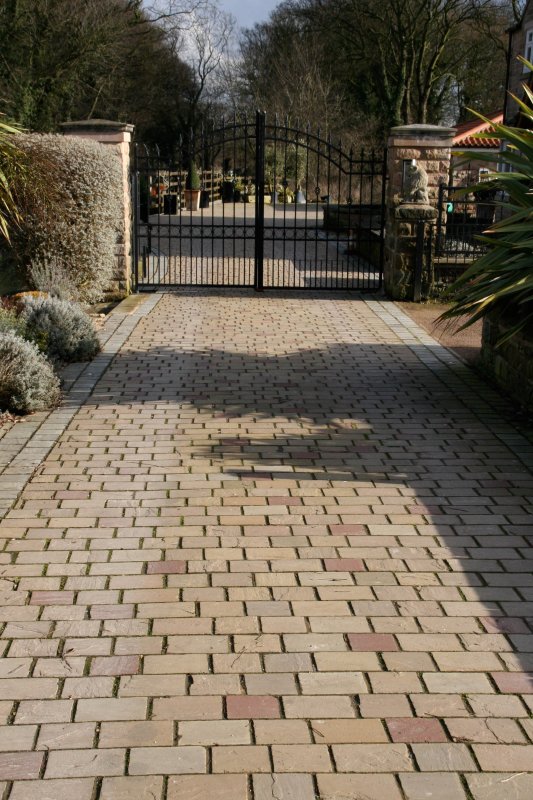
Tarmac needs a  good solid foundation. Excavation of the area should be between 16 to 18 centimetres. A sub-base of hardcore is required to be  laid and compacted.  Edgings of choice can be laid at this stage to sure the edges. A base layer should be installed this being a large grade of aggregate.  It should be raked out and compressed.  This is followed by a wearing course which has smaller aggregate (stone) and you are ready!  Just a short period of time for it to cure.  Just remember whether you are having an area laid or working within en existing you need to consider the purpose of the area.  Try and consider the existing garden area (if you have one!) do you need to increase or do you want to increase the hard landscaping area? Is it for vehicles or foot traffic only? Do you have an issue with moss or weeds?(Ant slip surfacing may need to be a consideraton).  What about drainage  we all need to consider this and  what about being suds compliantDrainage  covers do not have to be an issue.  Nor do they  need to be ugly.  See an example  here of works we have completed

These are only the simplistic of details really and are not the only option available.   www.pavingexpert.com is a really useful site and provides a lot of information not only for suppliers and installers but for home owners alike. It can also give rise to some ideas.


Garden Project Landscaping on the Go

January 31st, 2013

Garden Project Landscaping on the Go

Garden projects come and go.  Missed opportunities to show it as a work in progress.  Not  so with this one.

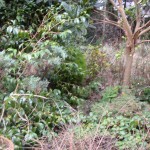
We have been working on this  large garden landscaping job for a while –  on and off.  These are not where it started but they are how it is standing at the moment.  Cleared back a lot of the growth,  cut back a lot of the plants and trees,  just to see where we are!

Updated details here

Garden Rubbish – What to do with it?

January 29th, 2013

Garden Rubbish – What to do with it?

  • Garden Rubbish can we as householders burn it?Garden Rubbish Mansfield
  • Are you in a Smoke Control area?
  • Do you know what a Smoke Control Area is?
  • How do you find if you are in a Smoke Control Area?
  • What does it mean?
  • What is  Garden Rubbish


Mansfield District Council  don’t actually say if you can or can’t with regard to Domestic and Garden Bonfires.  What they do say is that it can be a hindrance, nuisance and can spoil the enjoyment of others.  They do say  though that there is no permitted time for having bonfires.

They advise against burning garden rubbish and legal action can be taken in Magistrates Court if a smoke nuisance is caused.  They also say that Mansfield District Council  Cleansing Section can be contacted to arrange for garden waste to be removed.

The whole of Mansfield District is a Smoke Control Area.  What does this mean – it means simplistically that  it is against the law for any smoke to be emitted from the chimney of a building (including greenhouses and sheds).

That asside it may be brought into question what is classed as Garden Rubbish?

I was reading back through an old Mansfield Chad report  and the difficulties a gentleman had on disposing of his garden waste at a Council recycling centre.  One of the points raised was about the quantity of garden waste and the chad reported

We advise residents who are carrying out home or garden renovations which are likely to produce a lot of waste to hire a skip or dispose of the waste at trade waste sites that are located around the county where they can use vans and  trailers –– under current legislation, waste created by home and garden improvements is classed as trade not household waste

The defra website  known as the Department for Environment Food and Rural Areas says

“Local Authorities are responsible for designation and supervision of Smoke Control Areas.  Smoke control areas have been introduced in many large towns and cities in the UK (including virtually all of London) and in large parts of the Midlands, North West, South Yorkshire, North East of England, Central and Southern Scotland.  Please note that it is not possible for Defra to provide information relating to whether a property is located inside a smoke control area.

To be certain if you are or are not located in a smoke control area it is recommended that you contact the Environmental Health or Protection department of your Local Authority.  Contact details for your Local Authority can be found here:  http://www.direct.gov.uk/en/Dl1/Directories/Localcouncils/index.htm

Find the contact details and website for your local council via local direct gov website

http://smokecontrol.defra.gov.uk/locations.php

Weather conditions and the effects on our pets

January 28th, 2013

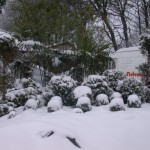
Weather conditions and the effects on our pets  Snow garden scene

Due to the adverse weather  conditions we have had and perhaps the excesses of trying to keep our lives and vehicles moving from our driveways and getting us in to work – has this resulted in our more than the normal use of thawing and anti slip surfacing  products?   We need to remember our  two and four legged friends  birds, dogs, cats, rabbits and  hedgehogs for example

Find out what Olive’s solution is

Rock salt poisoning is probably a strong phrase but the fact is  we need to make sure our actions do not impact too much on our environment.

COMPANION ANIMALS PET CARE FACTSHEET courtesy of the RSPCA

ROCK SALT POISONING IN PETS

Rock salt is a mixture of salt (sodium chloride) and grit, and is used to help de-ice roads in winter. Rock salt can be a danger to pets such as dogs and cats, if they lick it from their paws or fur.

It is difficult to say how much needs to be eaten for signs of toxicity to be seen. Even a small amount of pure salt can be very dangerous to pets. Ingestion can result in a high blood sodium concentration which can cause thirst, vomiting and lethargy, and in severe cases there is a risk of convulsions and kidney damage.

Most cases involve animals that have walked through gritted snow and then lick or chew it off their paws as they can find it irritating. It is therefore important to thoroughly wipe your pet’s feet and the fur on his/her legs and tummy after a walk or time outside. If he/she is showing any signs of discomfort after possible exposure to rock salt, use a mild, pet-safe shampoo and warm water to wash the affected areas, and dry your pet’s fur completely with a towel after washing.

Any animal suspected of ingestion of rock salt must be assessed by a vet immediately. This is important as signs can be non-specific and a blood test will be required to check the blood sodium concentration. Immediate veterinary treatment will be needed to rehydrate the animal and stabilise their sodium levels. The exact treatment will depend on the blood sodium concentration and the animal’s clinical condition. Owners should never attempt to induce vomiting; only a vet should do this.

The RSPCA has been asked whether antifreeze is added to rock salt. We are not aware of this practice and do not think it is likely, as adding salt to water lowers the freezing temperature and so has an ‘antifreeze’ effect in itself. If you are concerned about the composition of rock salt in your area, we would advise contacting your local authority for information.

For more information on preventing poisoning in pets and what to do if poisoning is suspected, visit the advice section about poisoning on the RSPCA website.

Never ‘watch and wait’ in any case of suspected poisoning. If you suspect your pet has been poisoned, act fast and contact a vet for advice immediately.USEFUL LINKS: •Poisoning in pets: www.rspca.org.uk/poisonsing •Poisoning in dogs: www.rspca.org.uk/allaboutanimals/pets/dogs/health/poisoning •Common dog poisons: www.rspca.org.uk/allaboutanimals/pets/dogs/health/poisoning/common •Poisoning in cats (includes link to leaflet about common cat poisons): www.rspca.org.uk/allaboutanimals/pets/cats/health/poisoning•Antifreeze: www.rspca.org.uk/allaboutanimals/pets/cats/health/poisoning/antifreeze• Find a vet:www.rspca.org.uk/findavet

Driveway Gritting and de-icing

January 27th, 2013

Driveway Gritting and De-icing and the weather

Due to the heavy fall of snow here in  the Nottingham, Derby, Leicester, Chesterfield and Sheffield areas over the past couple of weeks  it has made us here at Drive-Cote think about the situation.  We remind ourselves of  the possible damaging effects the bad Winter weather and  gritting and de-icing can have on our homes, gardens, driveways,  paths and patios. 

When I was watching the BBC One show one of the guests mentioned about how it can affect our best friends (our four and two legged friends) so I contacted the NCC — Nottinghamshire CC (@NottsCC) January 25, 2013 gritting department  via twitter  @drivecoteltd  and they gave me  details- the  RSPCA – advice on the effects of rock salt on pets  and they gave me some very useful info but it got us thinking.

I think  one  important thing to remember is that it is a necessary evil and perhaps  http://youtu.be/nCqexmC5pGU  Olive is on the right road!

How does this  affect the our driveway of  concrete (which includes imprinted concrete), tarmac, block paving and slabs

Frost damage to

  • CONCRETE driveways paths and  patios  is sometimes called  heave. The soil  or surface below the  driveway  has a water content which forms into ice.  This can provide enough pressure  to lift and crack areas  of the concrete  driveway path or patio.  Newly laid concrete can become affected if the  water in the concrete freezes also known as spalling.  The best  form is prevention.  With  a correctly and well laid surface this should not happen.  Concrete is not an  indestructible product but it is a very tough and durable product.  Surface damage is not ideal, and does not look very nice but it is a better option than the alternative of a structural damage like heave.
  • TARMAC can be  due to the the expansion and contraction of  water after it has seeped through the tarmac.  Cold temperatures cause the water  to freeze.  It can then  expand. This can then crack and  can weaken the tarmac when ice melts. Gaps or voids in the surface  occur which can form into pothole like areas on roads
  • Slabs and Block paving. As these both have independent  sections slabs these are a little different.  Depending on how well they have been laid and how impermeable the joints are  they can become uneven, especially at the edges.  This can then allow the ingress of water enabling once again the freeze thaw.  In addition they can be a slip and trip hazard and this is where a type of anti slip surfacing may help.

With regard to the roads what happens when salt is brought into the picture ? Water freezes at 32 degrees Fahrenheit. Salt added lowers the temperature that water will freeze. This creates an artificial freeze-thaw cycle and therefore can allow more occurrences of the damaging cycle to occur.  Springtime is worse  because of the melting that takes place and because the temperatures fluctuating above and below the freezing point very frequently

Environment Agency flood advice for Nottingham people

January 24th, 2013

Environment Agency flood advice for Nottingham people

Can you guess what it is? – Build  Snowmen – according to Roy Stokes a spokesperson for the Environment Agency.  According to the experts  snowmen melt more slowly than snow on the ground.  As a result of this,  building them would help to prevent floods as the snow starts to melt

This is Nottingham reported this today and it’s certainly put an interesting slant on things!  Perhaps I could get a job as a snowman builder in Winter?  We Brits can help slow the rate of the sudden thaw by building snowmen in the garden and on driveways it says.

Roy Stokes  is  Flood and Coastal Risk Management Programme Manager for Nottingham.  According to Mr Stokes  the snow will be compacted when you  build with it and create a snowman and this helps cause the snow to melt more slowly.

I think the idea is if you clear the driveway,  the snow thaws away,  but the compacted pile  of snow you leave at the side stays longer .  According to Roy Stokes  a gradual thaw is better than  a really quick one as floods are a potential if things thaw too quickly.

Dr Simon Keeling, forecaster at weatherweb.co.uk, warned that localised flooding was likely  following the thaw.

He said: “There is going to be a big swing in temperatures, from as low as -13°C on Friday night to 13°C on Tuesday.

“It will be really noticeable, and, as the majority of England, Scotland and Wales is under a layer of snow, there will be a lot of standing water around. There is likely to be localised flooding and  conditions will not be good.

“We are going to see a rise in temperatures next week, followed by a cold spell, but nothing like the recent freeze.”

sitting_snowman_188038

flood advice for Nottingham build a snowman

Can you believe this –  I don’t know?   An army of snowmen would be needed ?

With all this snow, the thawing and temperature conflicts –  perhaps  it should be borne in mind  what damage will be caused to our driveways, paths , patios and gardens.   Depending on what is down – tarmac, concrete, block paving, imprinted concrete, paving slabs they are all permeable and if water can get down it has the potential to freeze.  Prevention and maintenance are key words here.


Snowmageddon comes to Sheffield Nottingham Derby Leicester

January 18th, 2013

Snowmageddon comes to  Sheffield  Nottingham Derby  Leicester

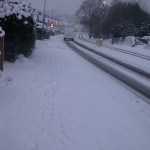
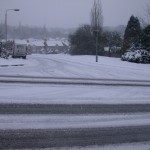
How good is this weather ?  Even our Resin Drives  anti slip qualities can’t do much about this!  Snow arrives and creates havoc in an instant. Lets hope it’s not too harsh for the garden and the plants!  It should keep the weeds at bay though!  Sheffield Nottingham Derby and Leicester East Midlands towns affected.  Hopefully the local councils will have the gritters out in force

Snowman looks good don’t you think?  Lets hope it doesn’t stay too long.  Kids off to the panto at the Palace Theater Mansfield tonight.  Hopefully they won’t get to distracted by the snow

Resin Driveway – Resurface your existing surface

January 15th, 2013

Resin Driveway – Resurface your existing surface

Whether your driveway is concrete,tarmac or imprinted concrete  why not have it resurfaced and create a brand new Resin Driveway.  Improve don’t move! Virtually maintenance free!

Resin Bonded Aggregate, Resin Bonded stone, Resin Bonded Gravel – all the same resurfacing options to give an anti slip surface.

We can resurface your old or tired concrete or tarmac with a  Resin Driveway offering a brand new surface without having to have all the existing surface removed!

But please note

Resin Bonded resurfacing is not the same as Resin Bound surfacing!

There is quite an important difference!  –  Resin Bonded is impermeable.  Resin Bound is permeable

  • The existing surface is  relevant –

Resin Bonded needs to have a solid base  eg tarmac, concrete or imprinted concrete  – Resin Bound needs a permeable base.

  • The finish required is relevant 

Resin Bonded is coarse and antislip and impermeable. – Resin Bound provides a smoother surface and is permeable.

  • The purpose of the works is relevant –

Anti slip? For a driveway? For a path? For a patio? To improve? To lay a new surface? To prevent the ingress of water. To inhibit the grwoth of algae and moss?

We can help and guide you.  Sometimes what we think we need is not always what is right for that purpose or surface.  Sometimes we have to have what is suitable for the surface or even for the purpose.

We have over 10 years of experience so installing a Resin Driveway is our .  We are based in Mansfield and can work within a 60 mile radius – weather permitting – and when there is no snow!  Whether you are in Southwell, Newark, Sheffield, Ilkeston, Matlock or Chesterfield for example, we can help.  Derbyshire, Lincolnshire, Leicestershire Yorkshire all withing easy reach.   Please feel free to contact us for an informal chat and see if we can help you with a Resin Driveway.

We can also offer a garden design service, garden maintenance service  and decorative walling service.  Have you thought of installing artifical grass in a vertical setting?  Feel free to ask!  Why not compliment a new Resin Driveway with lighting?

Unfortunately if you have Block Paving we cannot resurface this but we can still offer suggestions and guidance and if we can’t help we know a man who can!

We can advise you on the right Resin Driveway for you!

Driveways Paths and Patios – Sub base requirements

January 12th, 2013

Driveways Paths and Patios  – Sub base requirements

Is a sub base really necessary?

Our resin bonded gravel and resin bonded stone for driveways works use an existing surface as a sub base.  Tarmac, asphalt, concrete and imprinted concrete  are the  dictates for vehicle use.

Our resin bound surfacing and resin bound paving options are not applied to  solid monolithic surfaces as these are used for foot traffic and therefore require a  sub base.  Example uses being paths or patios.

Not all Resin  Driveway companies work on the same basis so it is important to ask what is the difference and why.

There are two main differences

  1.  Permeable resin bound surfacing and resin bound paving
  2.  Impermeable resin bonded gravel and resin bonded stone

Originally  resin bonded gravel and resin bonded stone were used for high friction anti skid surfacing  road use on top of tarmac and asphalt. As a result of development of Resin and it’s uses  it has progressed  into a porous and permeable surfacing option – resin bound paving and resin bound surfacing

  • Permeable resin bound surfacing and resin bound paving uses a sub base and laid on compacted hardcore, sand or a permeable substrate such as wearing course for tarmac.
  • Impermeable resin bonded gravel and resin bonded aggregate is laid on the solid monolithic surfaces, tarmac, concrete, imprinted concrete and therefore uses a sub base but the sub base originally laid for the tarmac, imprinted concrete, tarmac or asphalt.

When it comes to paving such as block paving or slabs they nearly always need a sub-base usually between 75mm  and 150mm.  A sub base plays in important role in balancing and apportioning the stress applied if vehicles are to be used on it.

Preparation is always a key aspect.  It is important to  be aware that varying sizes and “lumps” of hardcore will not offer the same uniformity as graded hardcore.


Anti slip path for slippy imprinted concrete driveway

January 9th, 2013

Anti slip path for slippy imprinted concrete driveway

We have recently been contacted by a concerned relative whose father in law has a very nice but very slippy imprinted concrete drive and wanted to have an anti slip path installed.

This drive has been laid about 7 years and it sounds as though it is in  excellent condition – lovingly sealed and cleaned each year to extend and protect it.  Quite the right thing to do.  BUT  due to the slope on this access this is causing a great deal of difficulty for the owner and indeed his visitors.  Sealing protects but can also lead to reinforcing the slipperiness.   An anti slip path would alleviate the problem without having to have this otherwise perfect imprinted concrete driveway covered up.

We also get requests to  “put the colour back into the imprinted concrete “.  If the surface is looking dull, dirty and drab then it probably is in need of a good clean and re-coating with an appropriate acrylic lacquer.  Very often the colour has not actually  faded it is either  dirty, has had a poorly applied sealer, or just  requires the application of a fresh coat of sealant.  This could be compared to a coat of varnish – which automatically creates a vision of a slippy surface.

It should not really be too expensive and can rejuvenate and protect the surface of imprinted concrete (with the right product)  to a brand new look.

An important consideration though –  DIY sealing can be a mistake.  There is a plethora of  sealants available at D.I.Y. stores but compatibility with the surface it is being applied to i.e. a different sealer to the existing sealer already used on the surface of the concrete.  This can result inthe sealant not standing the test of time or it can react and cause a milky effect which you don’t really want..

Our Resin is not suitable for this purpose as it is designed to have our aggregates applied to it, but this is where it would be suitable to provide an anti slip path.

This particular customer wanted a solution to a problem and was wanting to consider cost the as well.  An anti slip path would certainly be a feasible option

We have totally resurfaced imprinted concrete driveways in the past- but it is not always necessary as sometime a small area –  is all that is required.

We provided a “guestimate” which the customer is currently considering.  We will update our post should this be completed.